


The music industry is often seen through the lens of art, entertainment, and emotion, but it is increasingly raising a practical question: how much energy it uses and how sustainable it can really become. From large festivals and concerts to clubs, tours, lighting, LED screens, sound, equipment transport, and technical crews, the music industry consumes large amounts of energy. A green energy policy is no longer just a nice idea but something that directly affects the future of events, organisers, and performers.
Is such a policy feasible? Yes, but not everywhere, not fully, and not overnight. That is the heart of the matter.
Where energy is actually used
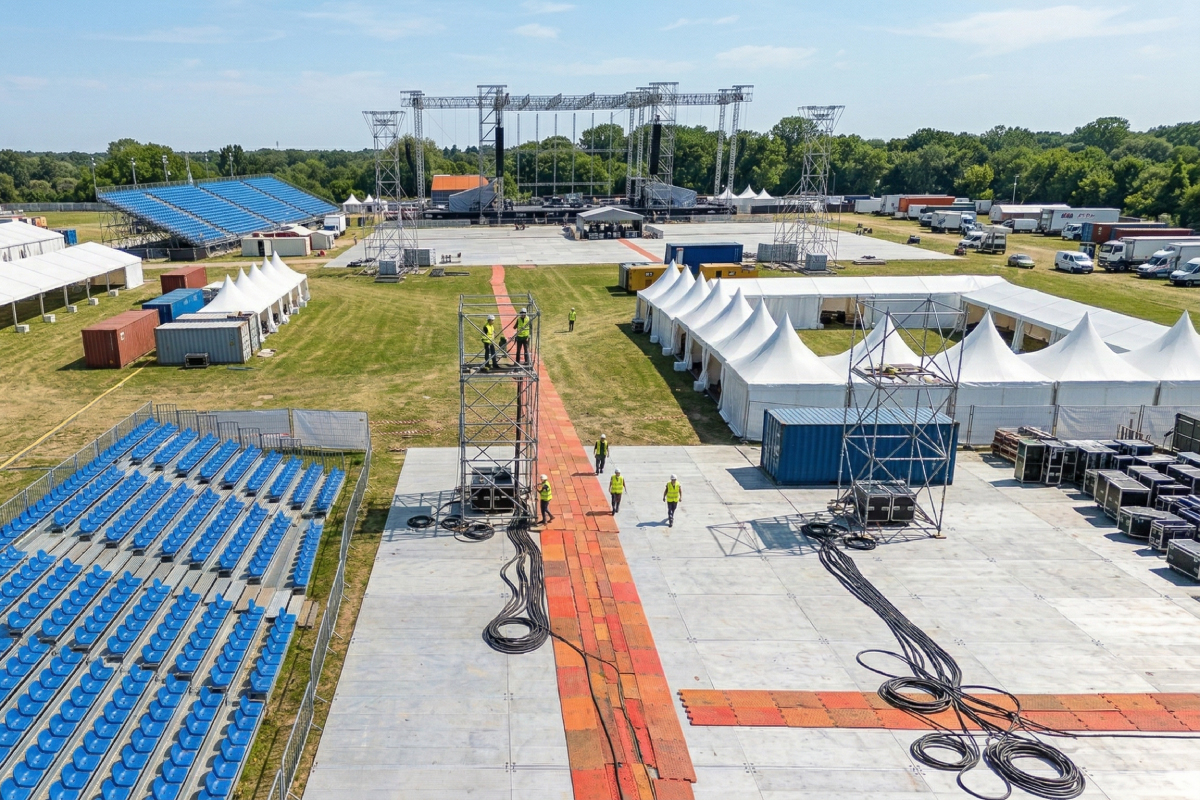
The main issue is not only electricity consumption but how energy is used. Large concerts and events often rely on temporary solutions: generators, extra power distribution, and complex logistics. Add trucks, equipment transport, setup, teardown, and multi-day work on site, and a single serious event leaves a large energy and organisational footprint. If you only look at the stage and lights, you miss the full picture. The biggest consumption often lies in the full logistics of the event.
Energy efficiency as the first step
A green policy does not stay at the level of an idea. There are concrete steps that deliver results. The first is energy efficiency: more modern LED lighting, better LED screens, more precise control of consumption, and better planning of equipment can significantly reduce total energy use without compromising the quality of the event. Sustainability does not have to mean weaker visuals or worse production.
A second important step is more rational power planning: equipment is not oversized, generators of appropriate capacity are used, load distribution is planned in advance, and unnecessary consumption on site is avoided. In practice this is often more important than big “green” stories, because it brings real savings and greater system reliability.
Reliability before green promises
The problem starts when a green policy is presented as a complete and instant fix for everything. The music industry is special because it demands faultless reliability. At a concert there is no room for failure, power cuts, or improvisation that could shut down sound, lights, or video in the middle of the show. Every energy system must first be stable and reliable, and only then as green as possible. In practice, organisers cannot simply drop proven solutions; they must gradually improve how they use them.
Serbia: a smarter approach to existing resources
In Serbia, at many venues and events, classic solutions are still key, because they are proven, available, and technically reliable. So a green policy here should not mean unrealistic promises but a smarter approach to existing resources: lower fuel use, better organisation of equipment, more efficient generators, less unnecessary idling, and better control of energy distribution. That can make a big difference without major technological experiments.
Feasible as a process, not a sudden switch
A green energy policy in the music industry is feasible, but as a process, not as an overnight change. The most realistic model is gradual improvement: modernising equipment, better event organisation, more careful planning of consumption, and a more serious attitude to every kilowatt used. When organisers, performers, and technical partners start to see energy not only as a technical requirement but also as a resource to be managed wisely, sustainability becomes a real topic. It is a matter of professionalism, costs, and long-term business sustainability.
From a business point of view, this approach is not just an extra cost. It often means lower operating costs, less waste, better organisation, and a stronger reputation. Those who realise earlier that more efficient energy use also brings business benefits will have an advantage in the years to come.
The answer to the question in the title: yes, a green energy policy in the music industry is feasible, but only if it is set realistically, with technical responsibility and in line with conditions on the ground. It is not feasible as an empty story; it is feasible as a clear and sensible direction of development.
In music, energy is not just part of the atmosphere. It is the foundation of every event. So the real question is not whether the industry should become more rational and responsible in using energy, but how quickly and how wisely it can take that step.